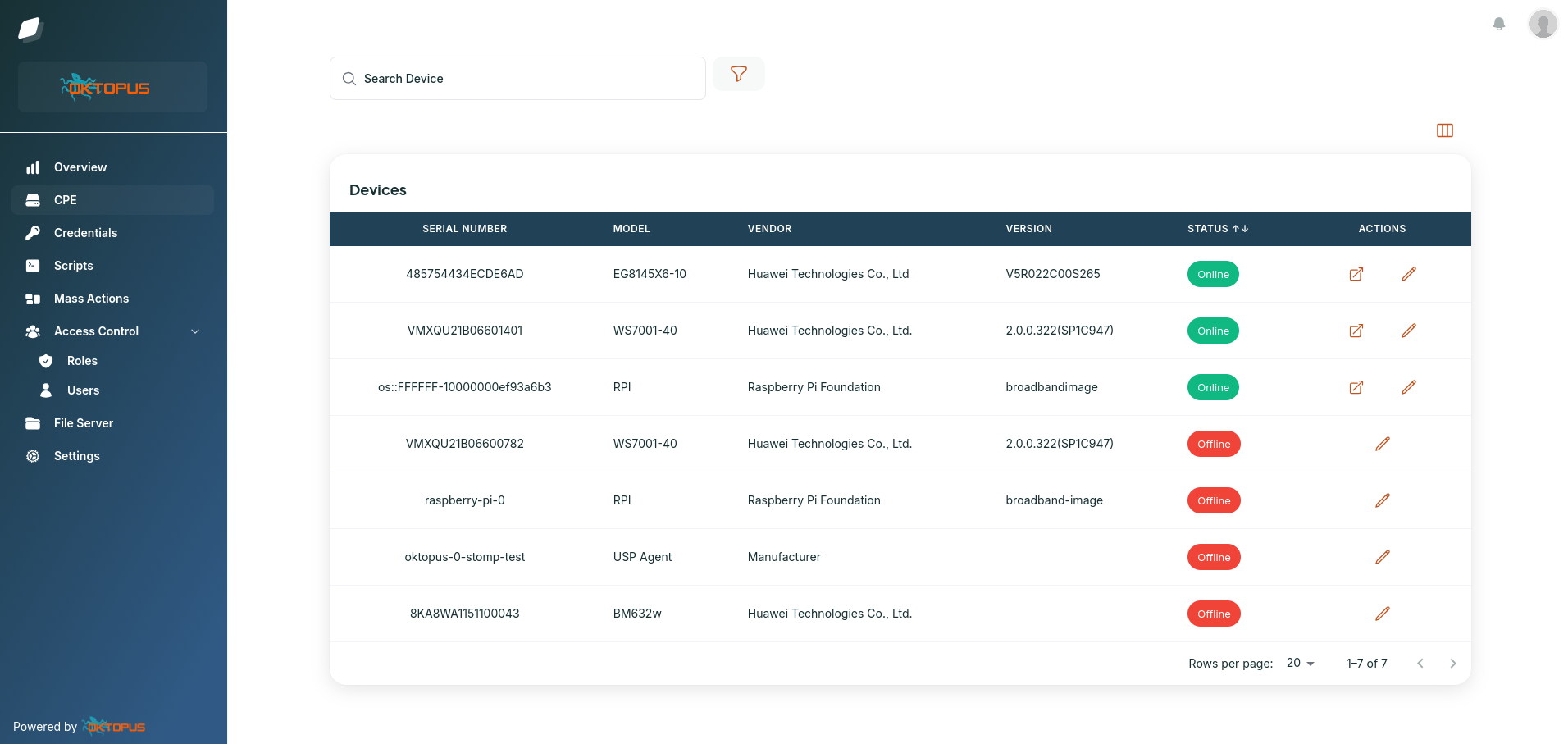
CPE Data Analysis


In modern ISP operations, the CPE is no longer just a box installed at the customer’s home. It is a real-time data source capable of revealing exactly what is happening across the access network, the Wi-Fi environment, and the subscriber’s experience.
Every CPE continuously generates thousands of parameters: Wi-Fi signal strength per client, channel utilization, noise levels, connected device count, CPU and memory usage, temperature, interface statistics, packet loss, latency, error counters, PPPoE sessions, DHCP behavior, mesh topology, and much more. When properly collected and analyzed, this data becomes the foundation for proactive diagnostics and operational intelligence.
Underlying Protocols
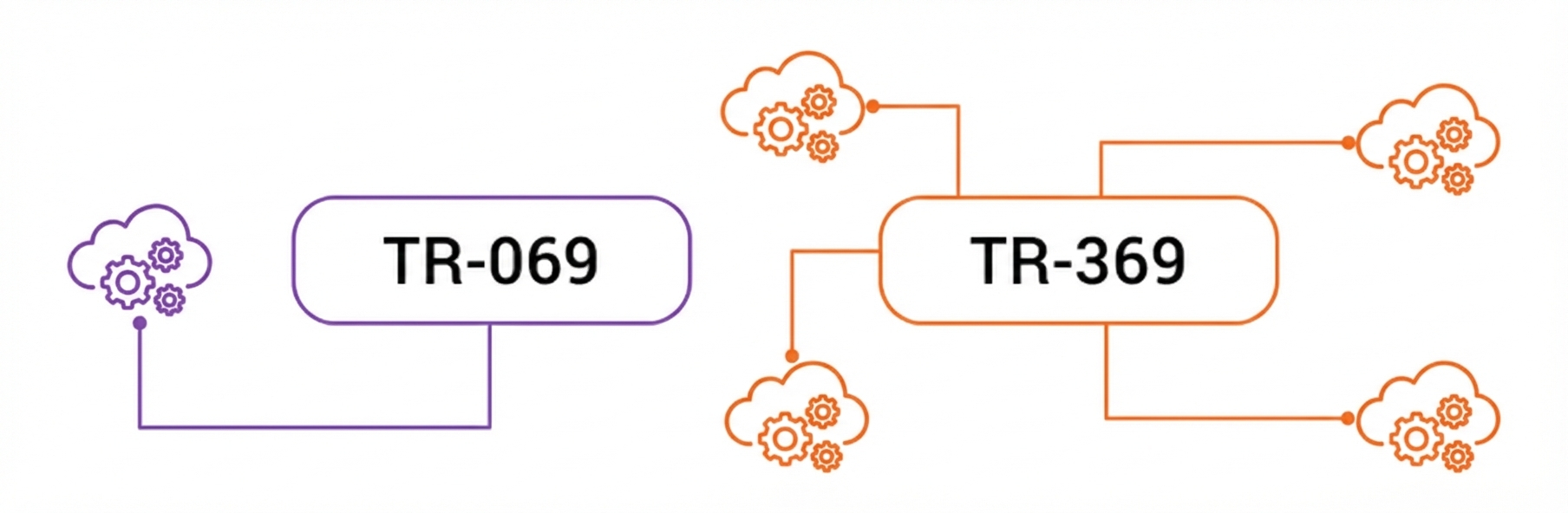
To gather all the necessary data in a multi-vendor CPE fleet is challenging due to the multiple ecosystems of each manufacturer. That's when the TR-069/369 protocols from Broadband Forum come into play, enabling management of all types of CPEs, from different vendors, transport layers (fiber, cable, cellular) and technologies generations. It becomes possible to interact with devices using the same mechanisms, therefore, you can use one single platform to capture, analyze and take actions on all your devices.
TR-069 is by far the most widely used protocol for CPE management. It was created 20 years ago and is adopted as the de facto option. The TR-369 is its successor, coming with lots of improvements and built from the ground up to overcome the limitations faced on its predecessor.
Digital Twins
Some equipment lack of resources to talk and provide data to the ACS (TR-069 controller of the CPE), Oktopus introduces a digital twin layer; a powerful architectural advantage. Instead of interacting directly with the physical CPE hardware for every operation, the system interacts with a digital twin that mirrors the device’s full data model and state. This twin is decoupled from the hardware layer.
That decoupling changes everything.
Operations such as parameter reads, configuration validations, state comparisons, and workflow executions can happen against the digital twin first—without repeatedly querying the live device. This dramatically reduces round trips, lowers data transfer, minimizes load on the CPE CPU and memory, and avoids unnecessary network chatter.
Because interactions are handled at the digital twin layer, the system can scale horizontally with far greater efficiency. Whether managing thousands or millions of devices, the bulk of operational logic runs in the platform—not on constrained hardware in the field. The real CPE is only engaged when necessary, for state synchronization or configuration changes.
Real-Time Bulk Data
With TR-369 (USP), devices establish secure, persistent connections to the management platform, enabling real-time data streaming and event-driven communication. Instead of relying solely on periodic polling, ISPs gain immediate visibility into performance degradation, connectivity drops, Wi-Fi instability, or abnormal resource consumption. This transforms CPE management from reactive troubleshooting into continuous monitoring.
By leveraging these technologies, ISPs can address issues before they impact the customer experience, ensuring a seamless and reliable service. This approach not only enhances operational efficiency but also provides a competitive edge in the rapidly evolving telecommunications landscape.
Data Flow
The operational flow becomes highly efficient:
--> The device connects to the system.
--> We ingest and synchronize its full data model.
--> A digital twin is maintained and continuously updated in case of TR-069, while TR-369 keeps communication channel open.
--> Thousands of parameters are pushed/polled to the Oktopus ControData Flowller.
--> Oktopus analyses data with its QoE algorithm and AI reports data in natural language.
Over time, aggregated CPE data reveals deeper insights: firmware stability trends, hardware performance differences, recurring interference patterns, peak usage behaviors, and infrastructure bottlenecks. All of this intelligence is generated with minimal strain on field hardware.

Conclusion
When thousands of parameters are transformed into structured analytics, the CPE becomes more than a managed endpoint—it becomes an intelligent, continuously analyzed edge node.
By combining real-time collection through TR-369 with decoupled, scalable TR-069 digital twin architecture, ISPs can deliver higher service quality with less manual effort, lower infrastructure load, and significantly improved operational efficiency.
Take control of your
network today
The world’s most widely used USP Controller and TR-069 ACS, with
enterprise-class features and no vendor lock-in.