Oktopus & Wimore Success Case

About Wimore
Founded in 2010 in Reggio Emilia, Wimore SRL began as an internet service provider with a clear purpose: deliver dependable connectivity to businesses in areas where stable connections were hard to come by. As its customers' needs evolved, so did Wimore, expanding its offering to include business telephony, virtual PBX systems, cloud services, data backup, and becoming a single technical partner for companies across the region.
Today, Wimore employs more than 40 people and has built a strong reputation for network resilience, combining fiber and wireless technologies with automatic backup lines, and for responsive, hands-on customer support. This combination of technical reliability and steady growth is what led Wimore to choose Oktopus.
The Use Case
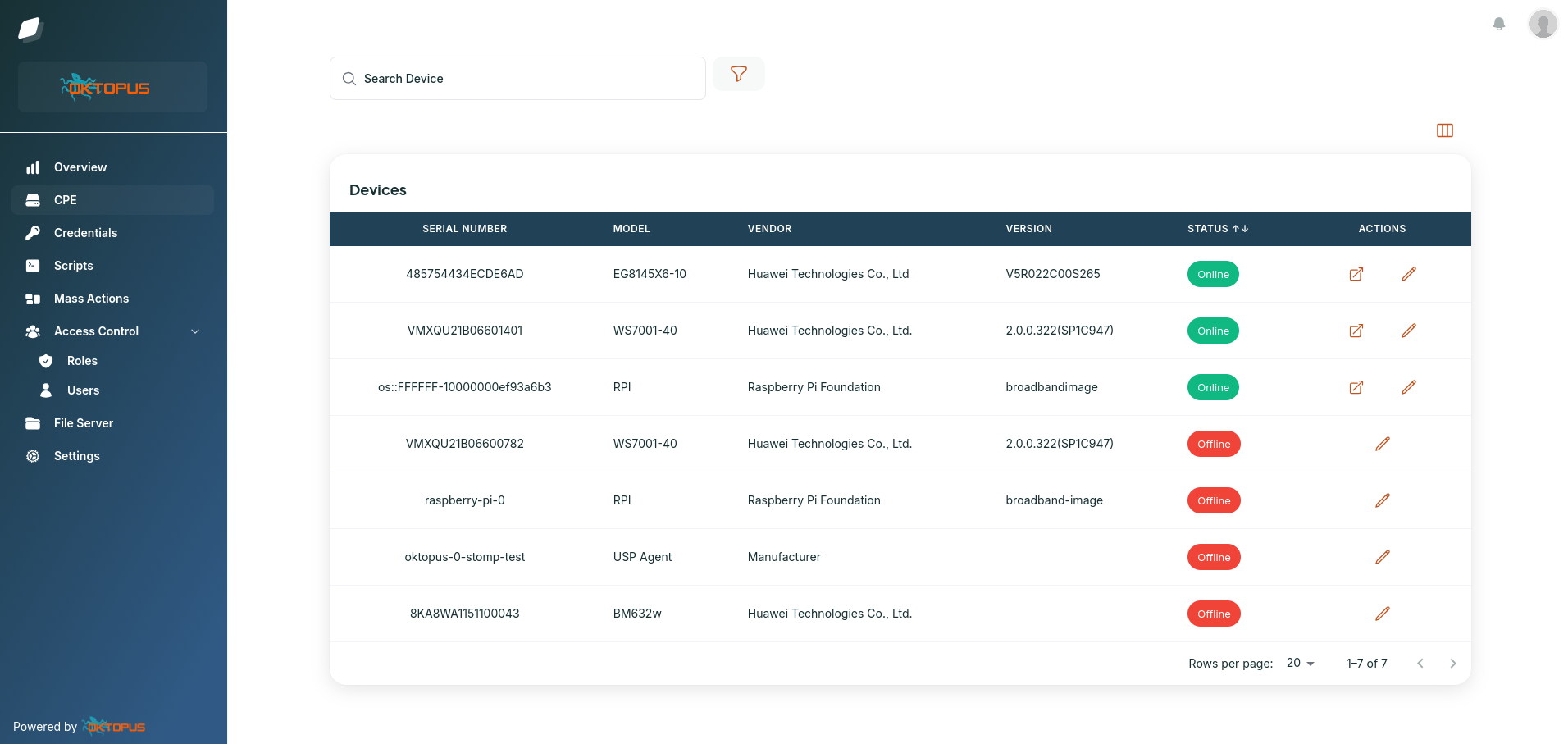
As Wimore's customer base grew, so did the number of devices deployed in the field: routers, VoIP gateways, and backup connectivity units spread across hundreds of business sites. Managing that fleet manually, with technicians dispatched for every configuration change, diagnostic check, or firmware update, was no longer sustainable.
Wimore needed a single platform to monitor, configure, and maintain its multi-vendor equipment remotely, without compromising the reliability its customers expect. That platform is Oktopus, and it now sits at the center of how Wimore's team handles voice services, connectivity monitoring, field support, and fleet maintenance.
Voice Service
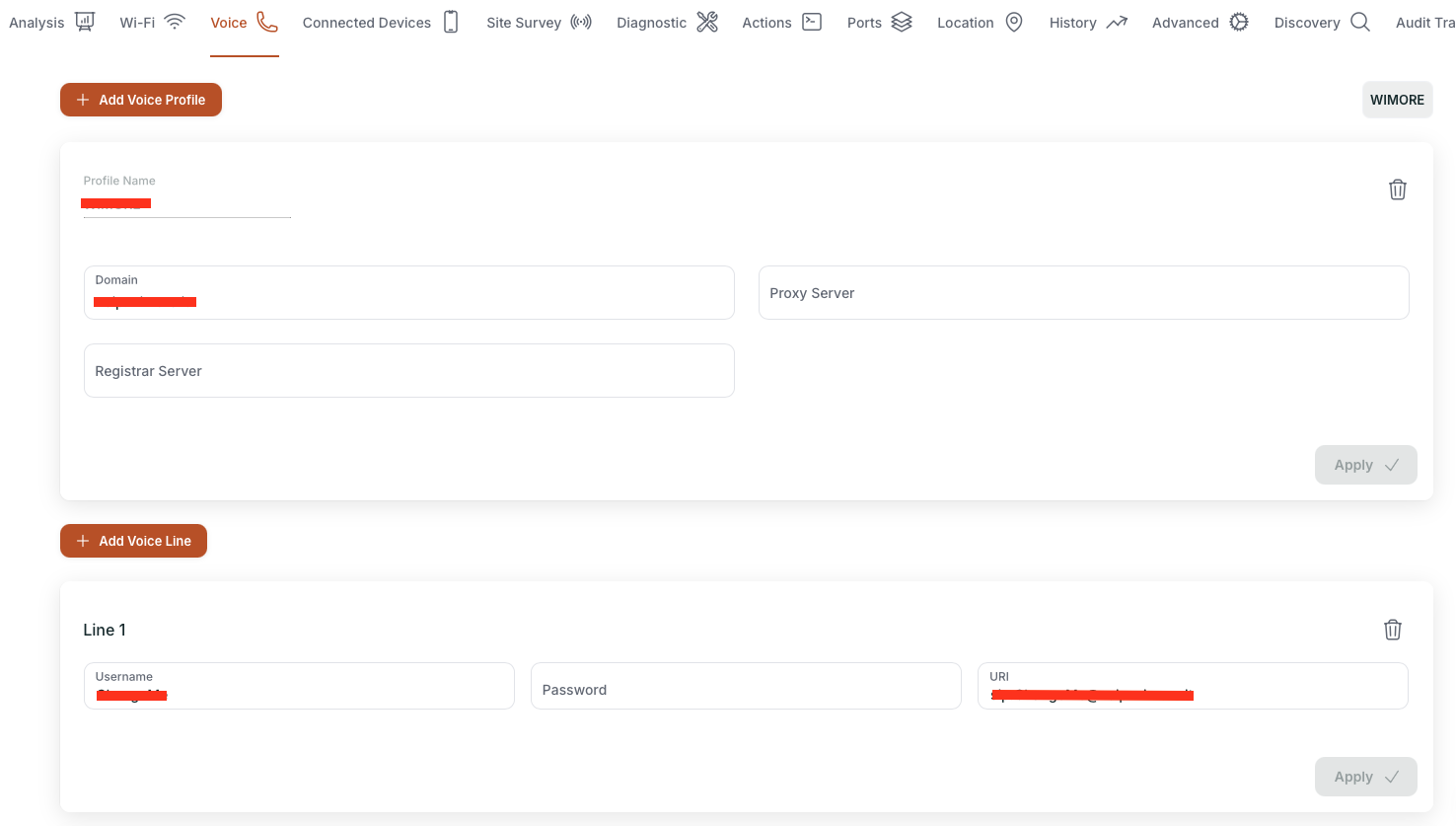
Wimore's VPBX offering relies on VoIP devices installed at each customer's premises, and any misconfiguration or outage directly affects a client's ability to make and receive calls. With Oktopus, Wimore's team can provision SIP settings, monitor call quality, and troubleshoot voice issues remotely, without waiting for a technician to visit the site. This shortens resolution times and lets Wimore keep its promise of dependable, always-on business telephony.
xDSL and Cellular Connections
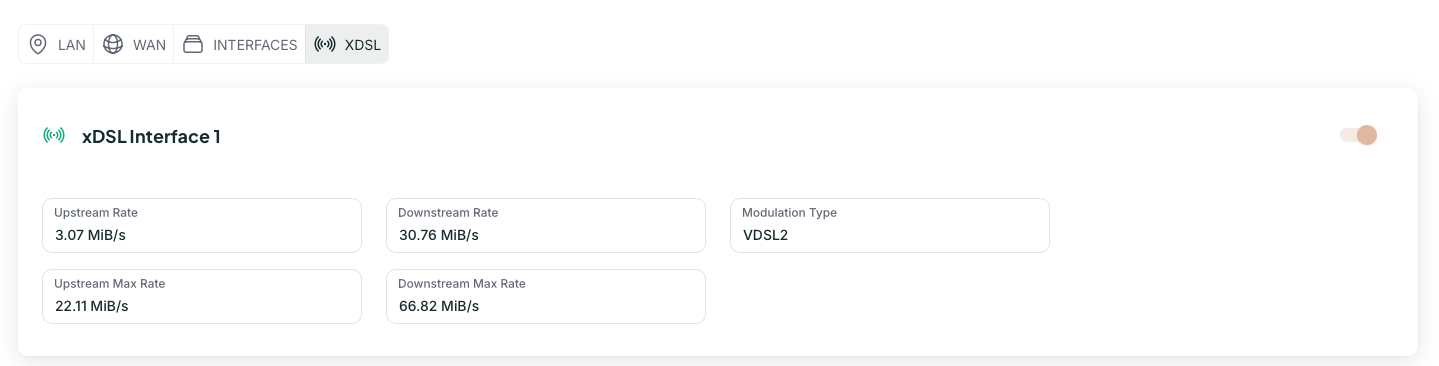
Wimore built its reputation on connectivity that does not go down, largely thanks to combining xDSL or fiber lines with cellular backup on the same device. Oktopus gives Wimore real-time visibility into the status of both connections on every unit in the field, so the team can confirm that failover is working as intended, spot a degraded line before a customer notices, and understand exactly which connection is active at any given moment.
Automatic Geolocation
When something goes wrong in the field, knowing where a device actually is matters as much as knowing what is wrong with it. Oktopus automatically geolocates connected devices, giving Wimore's support team an accurate picture of a unit's location without relying on customer-provided addresses that are sometimes outdated or incomplete. This speeds up diagnostics and makes dispatching a technician, when one is genuinely needed, far more efficient.
Bulk Firmware Upgrades
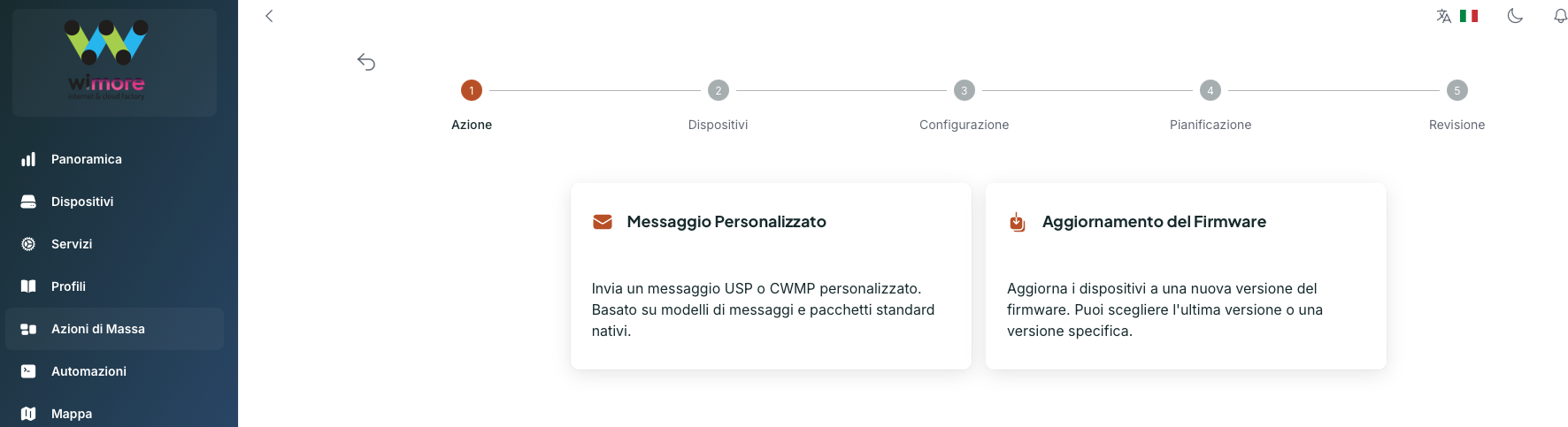
Keeping a large, multi-vendor device fleet on current firmware is one of the most time-consuming tasks for any ISP. Oktopus allows Wimore to schedule and push firmware upgrades in bulk, across an entire device model or a defined group of units, instead of updating them one by one. This reduces the operational workload on Wimore's technical team and ensures that security patches and feature updates reach customers quickly and consistently.
CPE Vendor Integration
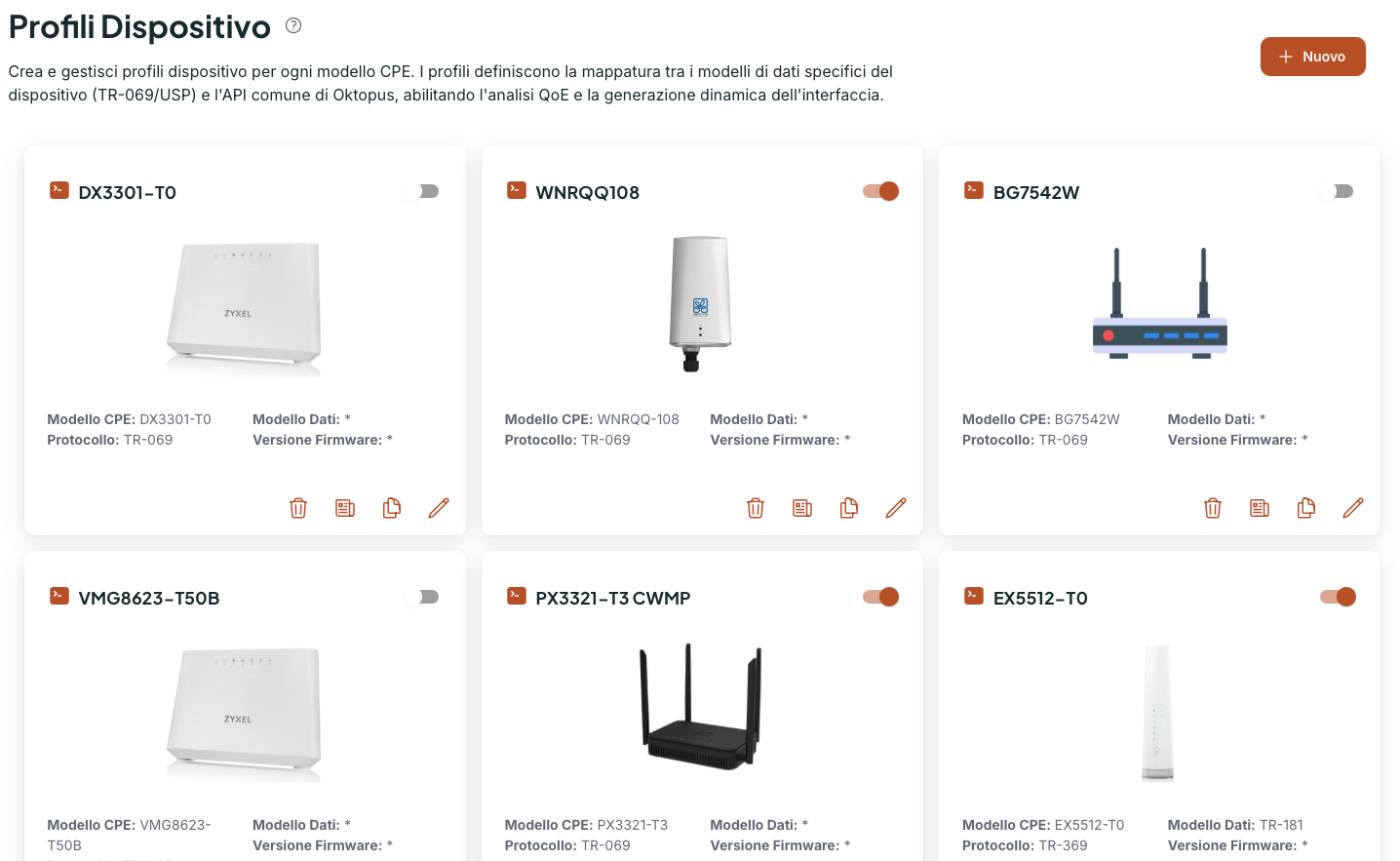
Wimore's device fleet is not made up of a single brand. Its network includes both Zyxel and Aethra CPEs, deployed across different customer segments and network conditions, and each vendor implements the TR-069 and TR-181 standards a little differently. Bringing all of these models under one management platform required Oktopus to work closely with Wimore's technical team to properly integrate and validate each device type.
Vendor Agnostic
Oktopus was built to manage CPEs regardless of manufacturer, supporting both the TR-069 (CWMP) and TR-369 (USP) protocols. This meant Wimore did not need to run separate systems for its Zyxel and Aethra devices, or accept a lowest-common-denominator feature set. Instead, both vendors' equipment is visible, configurable, and monitorable side by side in the same platform.
Oktopus Profiles
Under the hood, Oktopus handles this through Profiles: vendor-specific Lua scripts that map a device's native TR-069 or USP data model to Oktopus's common API. Each profile defines things like which features a model supports (Wi-Fi radio, voice, cellular, xDSL, and so on), how to build the request to read or write a given parameter, and how to parse the device's response into a standard format.
For Wimore, this is what makes it possible to run the same action, checking Wi-Fi status, reading connected devices, pushing a firmware update, against a Zyxel and an Aethra unit and get back consistent, comparable results, even though the two vendors expose that data very differently at the protocol level. New models are brought in by writing (or adapting) a profile for them, which is exactly the kind of work behind the WX-3100 homologation described next.
Hybrid Deployment
Not every ISP wants, or is able, to run its device management platform the same way. Oktopus supports both a fully managed cloud service and a self-hosted deployment on the customer's own infrastructure, and Wimore's setup reflects the flexibility that comes with that choice.
.png)
Managed Services in European Cloud
For customers like Wimore that prefer not to manage their own servers, Oktopus offers a cloud-hosted SaaS option with support delivered in the Italian timezone, backed by a 99.9% uptime SLA. This gives Wimore all the benefits of the platform, device management, diagnostics, geolocation, and bulk actions, without the overhead of provisioning and maintaining infrastructure.
How to Overcome NAT
A large share of Wimore's field devices, particularly those relying on cellular backup connections, sit behind carrier-grade NAT, which stands between a remote ACS and the device and can make standard TR-069 connection requests fail or time out. Wimore ran into this directly during rollout: devices would go quiet after a period online, and diagnosing it took a joint effort between both teams, including packet captures on Wimore's own firewall to see exactly where requests were getting lost.
Rather than solving this purely with workarounds, Wimore and Oktopus addressed it at the architecture level: the ACS itself was installed on Wimore's own infrastructure, inside their network. With the ACS sitting on the same side of the NAT as the CPEs, most of that traversal problem simply disappears, since the connection between ACS and device no longer has to cross Wimore's public NAT at all
On-Prem ACS With Central Cloud
That local ACS is not an isolated island, though. It connects outward to Oktopus's central cloud over NATS, a lightweight messaging system, which is what turns Wimore's setup into a true hybrid deployment rather than a fully disconnected on-premises install. Day-to-day device traffic, provisioning, diagnostics, firmware pushes, stays local, moving directly between the ACS and Wimore's CPEs inside their own network. Meanwhile, the NATS connection lets Oktopus's team deliver platform updates, apply maintenance, and provide support to Wimore's local instance the same way they would for any customer on the fully managed cloud.
For Wimore, this combination gives them the best of both models: the low-latency, NAT-free connectivity of running the ACS close to their own devices, plus the ongoing maintenance, updates, and support of a centrally managed relationship with Oktopus. It is also the same architecture pattern Oktopus offers to other operators who need to keep device traffic inside their own infrastructure without giving up a managed, continuously updated platform.
Take control of your
network today
The world’s most widely used USP Controller and TR-069 ACS, with
enterprise-class features and no vendor lock-in.